

Key Takeaways
- When touring a senior living facility, pay attention to how welcoming the environment feels upon entering and whether it fosters a sense of community and comfort for residents.
- Inviting and active common areas should promote resident well-being, as seniors spend much of their time outside of their individual rooms engaging in communal activities.
- Ask about staff-to-resident ratios and observe staff interactions to determine if the facility is adequately staffed and attentive to residents’ needs.
You probably wouldn’t buy a house sight unseen if you knew you would spend the majority of your golden years there. Similarly, don’t commit to a senior living facility until you’ve researched and toured multiple options to find the right atmosphere for you or your loved one.
To help you narrow down your choices, here are 15 things to look for and questions to ask when touring senior living communities. You can also download a list of these questions to take with you on your visit.
READ:
Nursing Homes vs. Assisted Living.
1. How Do You Feel When You Enter a Facility?
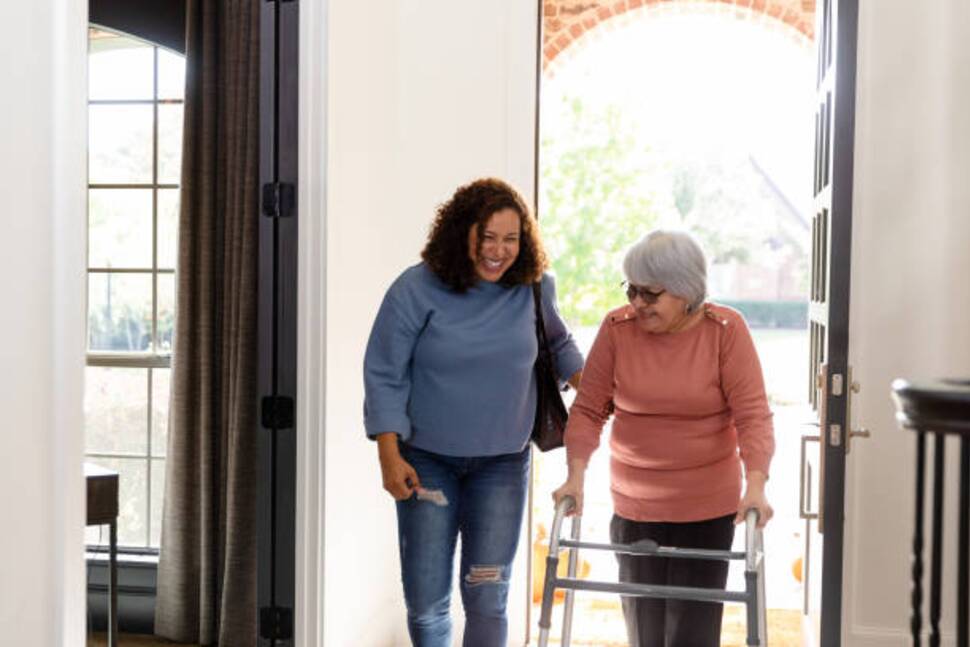
Touring a senior living facility begins with your first footstep.
- What’s it like when you walk in the door?
- Does friendly staff greet you?
- Is the building full of natural light and inviting furniture?
- Does the facility feel homey or institutional?
- Can you picture your loved one thriving in this community?
If you have a gut feeling that something doesn’t feel right, that’s your first red flag.
Ensure your loved one will be placed in a positive environment with staff and residents who look engaged and content.
Find the best assisted living near you
Search by state, city or ZIP code to find the right assisted living community for you.
Find Assisted Living
Read:
What Is Life Like in Assisted Living?
2. Are Common Areas Inviting?
Residents of senior living facilities spend almost as much time in common areas as in their individual rooms. When these spaces are lively and welcoming, older adults feel more at home.
Common areas in senior living facilities may feature:
- Outdoor patios and walkways
- Living room areas with inviting fireplaces and comfortable seating
- Areas to watch television
- Spaces to listen to music, play games and participate in activities
Observe the residents in the common areas. Although residents may enjoy watching some of their favorite television programs, the staff should still try to engage them in mentally stimulating
Ask to speak with the activities director or view the activities calendar to determine if there are pastimes your loved one would enjoy.
READ:
Dementia Care Activities
3. How Do the Resident Rooms Feel?
When touring an assisted living community, rooms should feel like a bedroom, not a hospital room.
Inviting rooms feature:
- Tasteful and clean furniture
- Windows and soft lighting
- Touches from home, such as a quilt, family photos or a few treasured collectibles
- A few activities easily in reach, such as a television, books or a radio
Pay attention to staff you see entering resident rooms.
- Do they knock, even if that resident is unlikely to respond?
- Do they greet the resident by name when entering into their personal space?
- Do they wash or sanitize their hands upon entering the space?
You’ll also need to ask if the facility requires you to bring furniture or if the rooms are fully furnished.
4. Is the Level of Care Offered Right for Your Loved One?
Not all senior living communities offer the same scope of care, so make sure to confirm the offering is right for your loved one.
Levels of care include:
- Independent living, such as at a stand-alone community or a continuing care retirement community
- Assisted living
- Skilled nursing or nursing homes
- Memory care
Make sure your loved one undergoes a functional status assessment to determine the level of care they need.
“This is done by a physical therapy or occupational therapy team. Once you know this crucial information, ask the senior living facility representative if their facility covers those needs,” says Dr. Dona Uncheselu, a hospice and palliative care physician at Parkview Health in Fort Wayne, Indiana.
Depending on the state, inability to do one activity of daily living (ADL) may be enough to be eligible for nursing home living, but usually it is the inability to do two or more ADLs that is the deciding factor, adds Marilyn Gugliucci, a professor and the director for geriatrics education and research at the University of New England in Portland, Maine.
5. Are the Care Plans Personalized?
A care plan is a written outline that details elements of your loved one’s care, such as:
- Medical oversight needed
- Daily mobility support
- Dietary needs and preferences
- Medication schedule
- Therapy and activity needs
A comprehensive care plan outlines both personal preferences, such as when the resident prefers to have their shower, and clinical progress, such as when to reevaluate a resident’s mobility.
6. Are There Signs the Facility Is Short-Staffed?
If the staff appear overworked or uninterested in the care of the residents, that’s a sign that your loved one will not receive the care they deserve.
From observations alone, you won’t be able to fully understand how well the facility is staffed. Make sure to also ask:
- How often do the physicians make their rounds?
- How many residents are assigned to each nurse? Nurses are responsible for administering medications, monitoring your loved one’s care plan and performing nursing care, such as catheter changes, infusions and wound dressings.
- How many residents are assigned to each nursing assistant? Nursing assistants help with the majority of your loved one’s ADLs, such as getting dressed, walking, eating and bathing.
- How often do therapy services meet with residents? This may include physical therapy, occupational therapy and speech-language therapy.
These questions reveal how hands-on a facility is. In the same vein, pay attention to how staff handle resident falls. Falls are the leading cause of injury-related death among adults age 65 and older, according to the Centers for Disease Control and Prevention. To further examine fall policies, ask how resident falls are treated and how many occur each month.
What is a “no lift” policy?
You may also consider inquiring if the facility has a “no lift” policy for their staff, a growing trend in how senior care settings respond to resident falls. A “no lift” policy can be a double-edged sword, so here is what to look for.
| Policy | Purpose | Implementation | Expert Opinion |
| Red flag “no lift” policies |
|
|
“These policies limit the facility’s liability but may show a tendency toward risk management over resident care,” explains Sean Marchese, a registered nurse at The Mesothelioma Center in Orlando, Florida. “This might be symptomatic of a larger problem within senior living, where revenue often takes priority over caring for residents.” |
| Green flag “no lift” policies |
|
|
These policies are in place most importantly to reduce risk of injuries for the staff and residents, Uncheselu says. There are benefits for staff and residents implementing a no lift policy. |
7. What Does the Dining Hall Feel Like?
When touring a senior living facility, a dining hall should have a cozy, restaurant feel, rather than a cafeteria-like atmosphere. This is important to make a senior living facility feel like home. Signs of a homelike senior dining experience include:
- Natural or soft lighting
- Proper dishes rather than plastic silverware and plates
- A menu for residents to choose from, though options may be limited depending on their dietary restrictions or health conditions. Residents with chewing or swallowing difficulty or kidney failure, for example, may not have full menu access.
- A pleasant aroma that smells like appetizing food
Older adults often struggle to maintain a healthy weight. When the dining hall is inviting and appetizing, it encourages the residents to eat and enjoy their meals. This is especially important because proper nutrition is essential for older adult health. If you schedule a tour in advance, you can ask if the senior living facility can prepare you a sample meal to try with your loved one.
8. Is There Outdoor Space?
Emerging research shows that green spaces are beneficial for mental health. Outdoor spaces might include:
- Outdoor seating for mealtimes or for visiting and relaxing
- Pavilions
- Walking paths
- Gardens
Outdoor space is also important to give the senior living facility more of a welcoming, community feel. It gives residents and visitors more common space to enjoy together.
9. Have You Visited at Different Times of the Day or Made a Surprise Visit?
One question to ask when touring a senior living facility is if you can have scheduled tours at different times of day, suggests Kate Granigan, a Boston-based licensed medical social worker, board president of the Aging Life Care Association and CEO of LifeCare Advocates.
She also recommends an unscheduled visit, if you can. When pursuing this, Granigan advises checking the general visiting hours, which are usually late morning until evening. This is to respect resident privacy during bedtime and morning routines.
Leave a Reply