

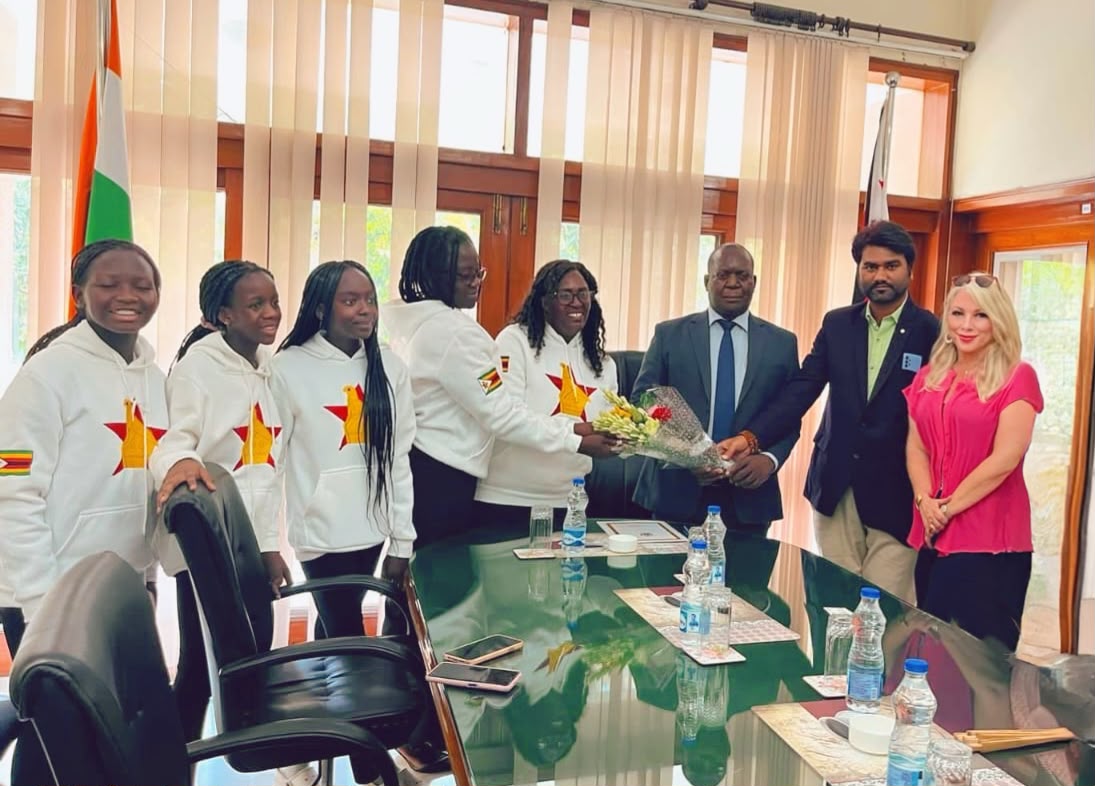
SAN JUAN, Puerto Rico — September 11, 2026 —With 273 million children and youth out of school worldwide, WEP is challenging Chancellors, Provosts, Deans, Directors, Principals, Counselors and senior education leaders to exercise the responsibility their positions carry—and accelerate action toward access to quality education.
The world is not short on education conferences.
It is not short on research, global networks, distinguished academics or declarations about what must change.
Yet 273 million children and youth remain out of school.
UNESCO’s 2026 Global Education Monitoring Report says the global out-of-school population has risen for the seventh consecutive year. One in six children, adolescents and youth worldwide is excluded from education.
And at the current pace, the world would not reach 95% upper-secondary completion until 2105.
For a child excluded from education today, that is not a timeline.
It is a lifetime.
That is the urgency behind WEP Global Advancement, launched by World Education Policy (WEP) on September 8, International Literacy Day.
Its mandate is clear:
WE ARE ADVANCING ACCESS TO QUALITY EDUCATION.
And its challenge to those who lead education is equally clear:
The time for accelerated action is now.
Leadership Cannot End at the Conference Table
WEP Global Advancement is not another invitation to collect a title, join another professional club or attend another international conference.
It is a call to responsibility.
Chancellors lead institutions. Provosts shape academic direction. Deans influence faculties and opportunity. Directors build programs and partnerships. Principals lead schools and communities. Counselors stand close to the realities learners face every day.
These positions carry influence.
And influence carries responsibility.

WEP President Dr. Virginia Rivera argues that global education leadership must now confront a more demanding question:
What changed because you were at the table?
Who gained access?
What barrier was removed?
What institution opened a door?
What partnership moved from paper to implementation?
What opportunity was created because someone with the authority to act actually acted?
“We cannot continue occupying comfortable offices, discussing barriers we already know exist, and call that progress. We have to step into the global education landscape and turn strategy into action.”
The Research Has Been Done. Now It Must Move.
WEP does not enter this phase without a foundation.
Its Chief Country Officers have been directing country-level research, outreach and engagement, bringing national education realities into the organization’s global work.
They have helped identify barriers.
Now comes the harder responsibility: acting on what has been learned.
Rivera describes the transition simply:
RESEARCH → STRATEGY → SYSTEMS → ACTION → IMPACT
“Our Chief Country Officers have brought country realities to the global table. Now we have a responsibility to act on what we know. Research must inform strategy. Strategy must build systems. And systems must produce action.”
Research that ends with a report is not enough.
A conference that ends with photographs is not enough.
A partnership that remains on paper is not enough.
Leadership that produces no consequence beyond the leader is not enough.
From Country Representation to Country Action
That shift is already visible within WEP’s country leadership.

Dr. Ona C. Miller, Chief Country Officer–USA for World Education Policy, describes her mandate in active terms:
“As Chief Country Officer–USA for World Education Policy (WEP), I am building a strong, credible, and forward-thinking network of leaders and institutions committed to advancing education, policy, innovation and opportunity for learners everywhere.”
The operative word is building.
WEP’s Chief Country Officers are not intended to be ceremonial representatives. Their role is to connect, mobilize and build—linking country realities, institutions and leadership with a wider international effort.
273 Million Reasons Not to Wait
There has been progress. UNESCO reports that 327 million more students are enrolled in primary and secondary education than in 2000. Global completion rates have also increased at every level.
But progress does not erase urgency.
273 million remain out of school.
And UNESCO warns that even that figure may understate the problem: humanitarian information indicates at least another 13 million may be missing from official estimates in the ten countries most affected by conflict.
The scale of the challenge cannot become an excuse for paralysis.
It must become a reason for acceleration.
Education Without Borders
At the center of WEP’s work is a conviction:
Quality education should be accessible to everyone.
Regardless of circumstance.
Regardless of gender.
Regardless of ability.
Regardless of background.
The barriers differ across countries. They may be economic, geographic, technological, institutional or social.
That is precisely why solutions cannot remain inside global conference rooms.
They must reach countries, institutions, communities—and ultimately learners.
This is the responsibility behind WEP’s vision of Education Without Borders.

A Vision Bigger Than WEP
WEP Global Advancement also sits within a larger vision established by its founder, Adv. Peeyush Pandit.
Pandit founded World Education Policy in 2021 around what he describes as a lifelong mission to eradicate barriers to quality education.
He has urged the United Nations to consider the creation of a World Education Organization (WEO)—envisioned as a global platform for education cooperation and policy coordination, inspired by the international coordinating role played by the World Health Organization in global health.
His vision for WEP reaches across 195 countries, with the ambition of advancing a common global education framework while working toward one fundamental outcome:
Every child and every young person should have a fair opportunity to learn, grow and succeed.
The objective is not simply to make WEP larger.
It is to increase the world’s capacity to act on education.
From International Literacy Day Forward
Launching WEP Global Advancement on International Literacy Day was deliberate.
International observances can focus attention.
But attention cannot be the destination.
“Education for all cannot remain language we repeat on international days,” Rivera said. “If we believe it, we have a responsibility to build for it.”
The world already knows education matters.
The world already knows millions remain excluded.
The world already knows many of the barriers.
The question now is what those with the authority, institutions and influence to change them are prepared to do.
THE WORLD DOES NOT NEED MORE BYSTANDERS.
IT NEEDS LEADERS IN ACTION.

WEP Global Advancement is calling on Chancellors, Provosts, Deans, Directors, Principals, Counselors and senior education leaders worldwide who are prepared to put leadership into motion.
Not simply to join WEP.
To become part of a global force advancing access to quality education.
Bring your experience.
Bring your institution.
Bring your influence.
Bring your country’s realities.
Most importantly, bring your willingness to act.
STEP UP.
TAKE YOUR PLACE AT THE GLOBAL TABLE.
BE PART OF THE ADVANCEMENT.
Connect. Collaborate. Build. Act.
Because 273 million children and youth out of school is not someone else’s responsibility.
It is a challenge to every institution and every education leader with the power to influence what happens next.
A seat at the table is not the accomplishment.
What changes because you occupied that seat is.
For education leaders ready to step forward:
InfoWorldEducationPolicy@gmail.com
WorldEducationPolicy.com
About World Education Policy
Founded in 2021 by Adv. Peeyush Pandit, World Education Policy was established from his vision and lifelong mission to eradicate barriers to quality education for everyone, regardless of circumstance, gender, ability or background.
Today, WEP brings together international leadership, country engagement, research, outreach and institutional collaboration around a central responsibility: moving from identifying barriers to building the systems and action required to remove them.
One World. One Foundation. One Education.
Leave a Reply