

WORLD EDUCATION POLICY (WEP) | 𝐆𝐋𝐎𝐁𝐀𝐋 𝐏𝐎𝐋𝐈𝐂𝐘 𝐖𝐀𝐓𝐂𝐇
NEW DELHI, INDIA — October 21, 2026 — the world, governments are reforming education systems to address one of the greatest challenges of our time: preparing people for a future that is changing faster than our classrooms.
From artificial intelligence and teacher shortages to educational inequality and workforce development, one message is becoming increasingly clear:
Access to education is essential. But access alone is not enough.
WHAT IS HAPPENING AROUND THE WORLD?
INDIA | Connecting Education to Opportunity
India continues implementing reforms that bring education, vocational training, digital learning, and entrepreneurship closer together.
The goal is to create more flexible learning pathways and prepare students for a rapidly evolving economy.
EUROPE | Rethinking Artificial Intelligence in Education
European policymakers are placing greater emphasis on responsible AI integration, teacher preparedness, student privacy, and digital inclusion.
Technology must strengthen education, not replace the human relationships that make learning possible.
AFRICA | Strengthening Educational Leadership
Across several African nations, curriculum reforms and initiatives supporting women in educational leadership are advancing.
These developments highlight the importance of empowering educators and strengthening local education systems.
LATIN AMERICA | Learning Beyond the Classroom
Countries are exploring flexible education pathways, improved learning assessments, and opportunities for youth and adults to continue their education throughout their lives.
UNITED STATES | Debating Educational Access and Accountability
Changes in education governance, school funding, and admissions policies are raising important questions about educational equity, parental choice, and public responsibility.
AUSTRALIA | Investing in Fairer Education
Education funding reforms continue to emphasize equitable access, improved learning outcomes, and stronger public education systems.
THE GLOBAL TEACHER CHALLENGE
According to UNESCO, the world needs approximately 50 million additional teachers by 2030 to achieve universal pre-primary, primary, and secondary education.
This is not simply a workforce challenge.
It is a challenge to our collective commitment to education.
Teachers remain the foundation of every successful education system.
BEYOND 2030: WHAT COMES NEXT?
As the world approaches the Sustainable Development Goals deadline, international discussions are beginning to shape the future of education beyond 2030.
We must ask ourselves:
Are we measuring enrollment or actual learning?
Are we preparing students for examinations or for life?
Are educational opportunities reaching the communities that need them most?
And perhaps most importantly:
Are our education policies creating meaningful change?
THE WEP PERSPECTIVE
At World Education Policy, we believe the future of education requires more than policy declarations.
It requires collaboration, evidence-based decisions, investment in educators, and solutions that reach classrooms and communities.
We must move from conversations to commitments.
From commitments to implementation.
And from implementation to measurable impact.
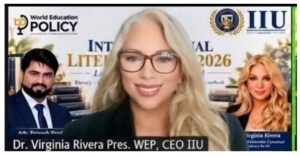
As WEP President, Dr. Virginia Rivera, emphasizes:
“Access enables people. People transform economies.”
Education must not simply prepare people to participate in the world as it exists today.
It must empower them to build the world we want tomorrow.
Leave a Reply