


There is a particular kind of leader who is easy to spot in a crowd and a much rarer kind who is easy to spot in a village that has no crowd at all.
Adv. Peeyush Pandit belongs to the second category. Two decades into building the Peeyush Group, what stands out about him isn’t the size of what he has built, but where he keeps choosing to show up — classrooms with too few chairs, clinics with too few doctors, winters with too few blankets.
A Vision Larger Than a Balance Sheet
Most institutions measure themselves in growth charts. Adv. Peeyush Pandit measures the Peeyush Group in something harder to graph: how many lives moved forward because it existed. His frequently repeated conviction — that a nation’s progress should be counted not in numbers alone, but in how many people rise together — isn’t a slogan borrowed for the occasion. It shows up in the way the Group actually spends its time: less on announcements, more on follow-through.

That distinction matters, because India’s next chapter — the ambition of a developed, self-reliant Bharat by 2047 — will not be written only in cities and boardrooms. It will be written in the thousands of small towns and villages that rarely make it into a headline. Adv. Peeyush Pandit’s work has, for years, quietly bet on exactly that idea: that a country rises only as high as its most overlooked corners.
Where Ideals Meet the Ground
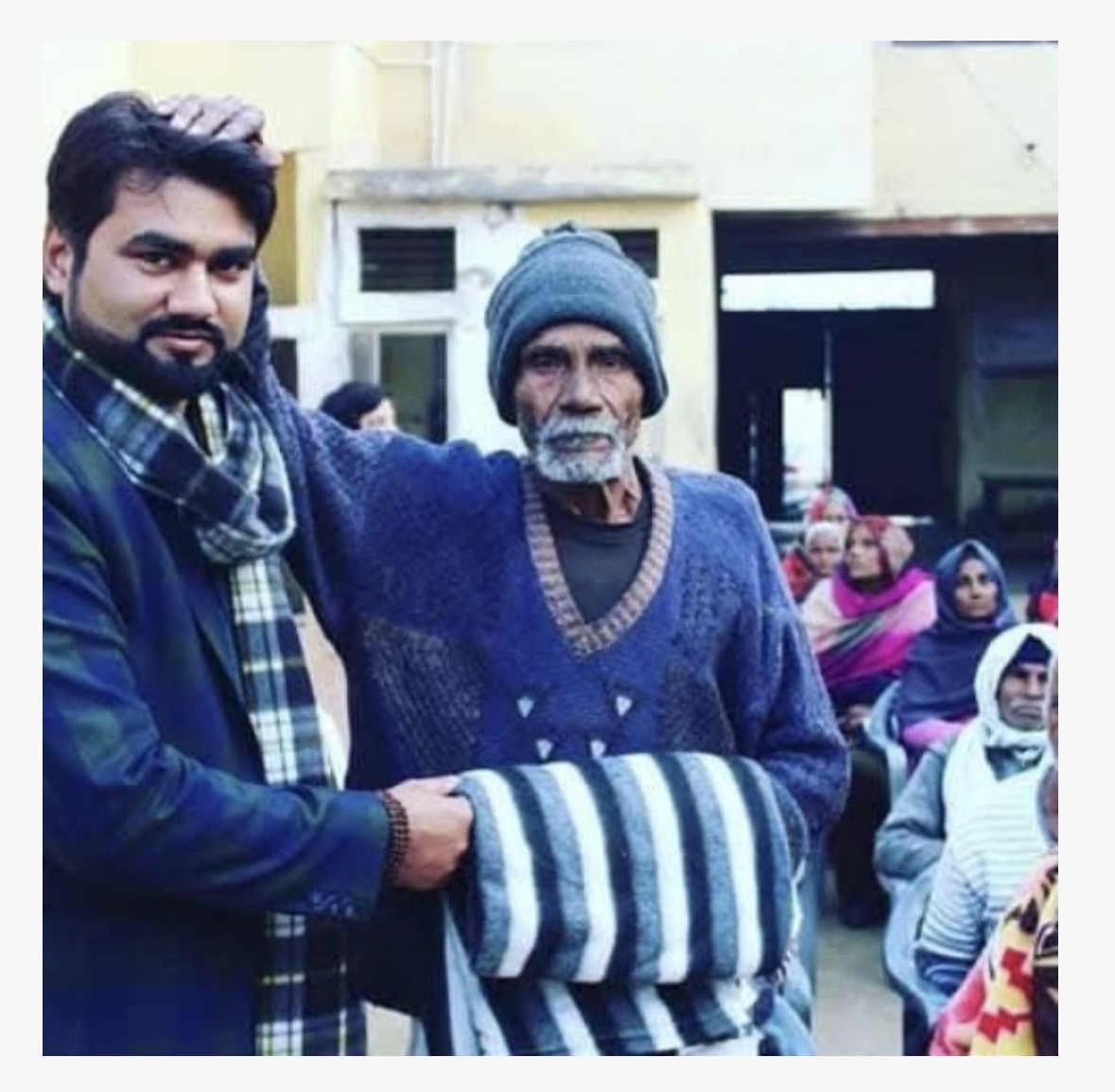
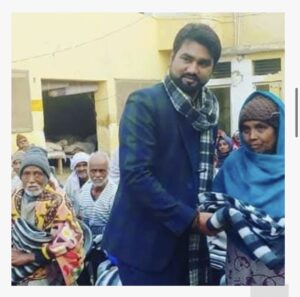
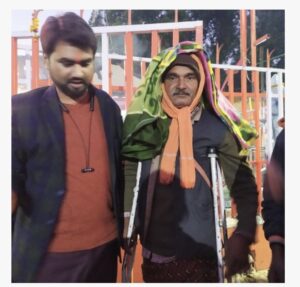
It would be easy to talk about “empowering communities” as an abstraction. Adv. Peeyush Pandit’s version of it looks like ration kits handed over without red tape, health camps set up where the nearest hospital is a day’s journey away, and blankets distributed to people who would otherwise spend a winter night without one. None of this is designed to be photographed well. It’s designed to work.
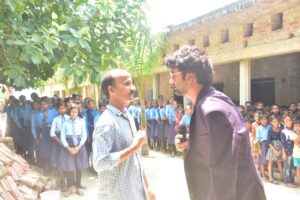
Alongside this immediate care sits a longer-horizon commitment: schools, universities, and skill-building programs meant to outlast any single visit or donation cycle. For Adv. Peeyush Pandit, these two efforts aren’t separate categories of goodwill — they’re the same instinct applied at different timescales. One meets a family’s crisis today. The other decides whether that family’s children have a different future tomorrow.
Mentorship as a Quiet Form of Nation-Building
Perhaps the least visible part of Adv. Peeyush Pandit’s work is also the most consequential: the time spent with young people, encouraging them to think critically, dream bigger, and lead with responsibility rather than ambition alone. He speaks often about wanting the next generation to aim not just for employment, but for meaningful contribution — a distinction that shapes how the Group designs its educational and skilling initiatives.
It is a patient, unglamorous kind of investment. But it is also the only kind that compounds — a student mentored today becomes, years later, someone else’s reason to stay in school, start a business, or return to serve their own community.
Twenty Years, and Still Building
What makes this body of work notable isn’t any single achievement, but its consistency — the same values showing up in a rural courtyard as in a formal boardroom, the same person listening before acting whether the audience is fifty schoolchildren or a room of global partners. Over twenty years, the Peeyush Group has grown from villages to global platforms, but the underlying commitment has stayed remarkably unchanged: lead with values, serve with humility, and build things that last longer than the applause.
As India looks toward the milestones ahead, the story of Adv. Peeyush Pandit offers a useful reminder — that a vision for a nation’s future is only as strong as the everyday, unglamorous work put into the people who make up that nation, one family, one classroom, one community at a time.
Leave a Reply