

18 July 2026
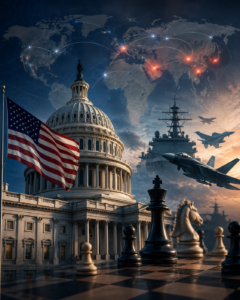
WASHINGTON, D.C. — As geopolitical tensions continue to evolve across several regions of the world, the United States is intensifying its diplomatic and strategic engagement to safeguard national interests, strengthen alliances, and promote global stability. Recent developments in Europe, the Middle East, and the Indo-Pacific have prompted American policymakers to reassess security priorities while expanding cooperation with international partners.
Senior U.S. officials have emphasized that diplomacy remains the cornerstone of the country’s foreign policy. Alongside diplomatic outreach, Washington is reinforcing defense partnerships with allied nations through joint military exercises, intelligence sharing, and expanded security cooperation. The administration maintains that these efforts are aimed at deterring conflict, ensuring regional stability, and protecting international trade routes that are critical to the global economy.
The growing complexity of international affairs has also accelerated discussions on energy security, cyber resilience, and emerging technologies. Officials believe that modern geopolitical competition extends beyond traditional military capabilities and increasingly includes cybersecurity, artificial intelligence, critical infrastructure protection, and economic resilience. As a result, federal agencies are working closely with private industry and allied governments to strengthen preparedness against evolving global risks.
Economic diplomacy has become another key pillar of the U.S. strategy. American leaders are pursuing stronger trade relationships, encouraging investment in strategic industries, and working with partner nations to diversify supply chains. These measures are intended to reduce vulnerabilities while supporting long-term economic growth and innovation.
Foreign policy experts note that maintaining open communication with allies and international organizations will remain essential in addressing global challenges. From humanitarian assistance and regional security to counterterrorism and maritime cooperation, the United States continues to engage with partners to advance shared interests while encouraging peaceful solutions through dialogue.
Officials have reiterated that America’s objective is not only to respond to immediate geopolitical developments but also to build a resilient international framework capable of addressing future challenges. Investments in diplomacy, defense modernization, technological innovation, and strategic partnerships are expected to remain central to U.S. foreign policy in the years ahead.
As global dynamics continue to shift, the United States faces the challenge of balancing national security priorities with international cooperation. Analysts believe that sustained engagement with allies, combined with strategic planning and diplomatic leadership, will play a defining role in shaping the next chapter of American foreign policy and reinforcing stability in an increasingly interconnected world.
Leave a Reply