

18 July 2026
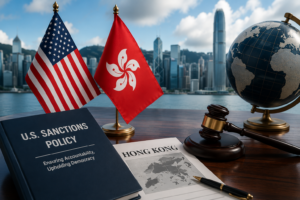
WASHINGTON, D.C. — The United States has announced a significant adjustment to its Hong Kong sanctions framework by allowing a previous national emergency declaration related to Hong Kong to expire while keeping broader restrictions under existing U.S. law in place. The move reflects Washington’s effort to modernize its sanctions policy without changing its overall position on Hong Kong’s political autonomy and rule of law.
U.S. officials clarified that although the expiration of the emergency declaration removes certain overlapping sanctions authorities, major measures established under the Hong Kong Autonomy Act and Executive Order 13936 remain fully effective. These provisions continue to target individuals and entities considered responsible for actions that undermine Hong Kong’s autonomy and democratic institutions.
The policy adjustment comes at a time when diplomatic engagement between Washington and Beijing has shown signs of gradual improvement. Analysts believe the decision reflects a broader effort to streamline U.S. sanctions while maintaining pressure on issues involving governance, human rights, and international commitments.
Officials emphasized that the United States remains committed to supporting an open international trading system while continuing to defend democratic values and the principles of international law. The administration stated that sanctions will remain an important foreign policy tool but will be regularly reviewed to ensure they remain targeted, effective, and aligned with national security objectives.
Economic observers note that the announcement provides greater clarity for international businesses operating in Hong Kong and the Asia-Pacific region. While some restrictions have been lifted due to the expiration of the emergency declaration, businesses are expected to continue complying with the remaining U.S. sanctions and export control regulations.
The development has drawn international attention, with governments and financial markets closely monitoring its implications for U.S.-China relations. Experts believe the decision illustrates Washington’s strategy of combining diplomatic engagement with carefully calibrated economic measures rather than relying solely on broad sanctions.
As geopolitical competition continues to shape global affairs, the United States is expected to maintain a balanced approach that supports regional stability, protects national security interests, and preserves economic cooperation where possible. Policymakers have reiterated that future sanctions decisions will continue to be guided by evolving international developments and strategic priorities.
Leave a Reply